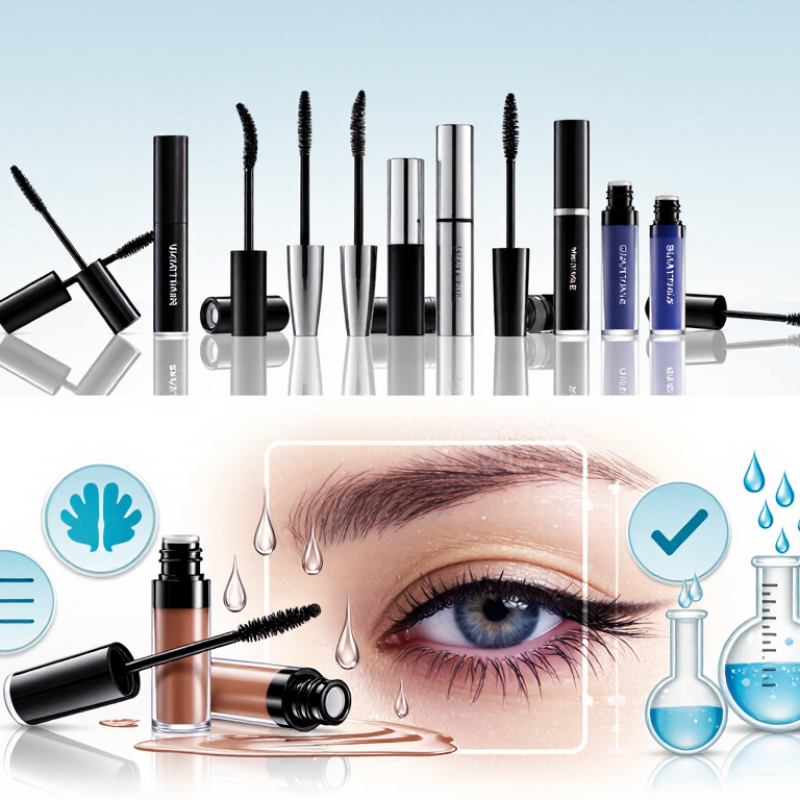
China Top 10 Mascara Suppliers Why Does Mascara Smudge?

Time:2026-10-13 Author:Sienna
0%

Mascara can create bright, defined eyes, yet it can also leave dark marks beneath them. Many readers ask, “why does my mascara always smudge under my eyes?” The answer rarely depends on one ingredient alone. Formula texture, drying time, natural skin oils, humidity, eye shape, and application habits can all contribute.

This guide introduces China’s top 10 mascara suppliers and examines the quality factors behind dependable products. It considers formulation experience, ingredient transparency, manufacturing controls, packaging stability, and wear testing. A professional supplier should explain its INCI list, batch testing, brush design, and performance standards clearly. Claims should be supported by practical evidence, not attractive promises. That matters.

Smudging often begins with excess product near the lower lashes. A thick, slow-drying formula may transfer when warm skin touches the lashes. Oil-based eye cream can make the problem worse. Humid weather adds another layer of difficulty. Curved brushes, tubing formulas, and water-resistant systems may improve wear, but no product suits every user.

Small details matter. A mascara that survives a laboratory test may still fail during a long office day. I have seen formulas look clean at breakfast and leave gray shadows by lunchtime. That gap deserves honest attention. Therefore, this article compares supplier capabilities, product development methods, and quality evidence. It also explains how buyers can identify realistic smudge-resistant claims and choose mascara that performs consistently in daily use.

China Top 10 Mascara Suppliers Why Does Mascara Smudge?

China’s Top 10 Mascara Suppliers: OEM Scale, MOQ, and ISO 22716 GMP

When buyers search for China’s top 10 mascara suppliers, the real question is often performance, not ranking. A practical shortlist should compare OEM scale, minimum order quantity, and ISO 22716 GMP controls. Large factories may support filling, brush assembly, shade matching, and packaging under one roof. That scale can shorten launches, but it may reduce flexibility for small test orders. Many mid-sized suppliers accept smaller pilot runs, often around 3,000 to 10,000 units. Custom formulas may require higher MOQs because raw materials, molds, and stability testing add cost. Ask for production photos, batch records, and a clear explanation of capacity. Numbers alone are not proof.

Smudging usually comes from excess oil, slow film formation, humidity, or poor brush control. During supplier evaluation, request wear tests at different temperatures and humidity levels. A reliable lab should examine drying time, transfer resistance, flaking, and removal behavior. ISO 22716 GMP provides a useful framework for hygiene, documentation, training, and controlled production. Still, a certificate should match the actual manufacturing site and product scope. Visit records matter. Check whether the supplier controls water quality, filling accuracy, microbial testing, and retained samples. I would also test the mascara after several weeks, not just on opening day. Some samples look excellent at first, yet smudge after a warm commute. That overlooked detail can change the final supplier choice.

Mascara Formula Science: How Waxes, Pigments, and Film-Formers Work

Mascara smudging usually begins with formula balance, not simply poor application. Waxes give the product body, structure, and resistance to movement. Harder waxes can support a crisp curl, while softer waxes improve glide. Too much softness may leave a greasy layer around the lashes. Heat and natural skin oils can then loosen that layer.

Pigments provide color, but they do not create strong wear alone. Their particle size, surface treatment, and dispersion affect smoothness and transfer. Film-formers create a flexible coat around each lash. A well-chosen polymer should resist water, oil, and repeated blinking without becoming brittle. If the film dries too hard, flakes may appear. If it remains too flexible, dark marks can collect under the eyes.

In supplier evaluations, I check the formula after blinking, humidity exposure, and several hours of wear. A clean swatch is not enough. Small changes matter. The interaction between waxes and film-formers can change dramatically with temperature. Pigment loading can also affect drying time and clumping. No formula is perfect. Even experienced developers may adjust the balance after real-world testing. For buyers comparing mascara suppliers, ask for stability data, ingredient function explanations, and controlled smudge testing rather than relying only on marketing claims.

Why Mascara Smudges: Sebum, Tears, and Humidity Weaken Film Adhesion

Sebum, tears, and humidity Sebum, tears, and humidity can weaken mascara’s film adhesion. Freshly cleansed lashes usually hold pigment better. However, the eyelid naturally releases oil throughout the day. Sebum can soften the polymer film and reduce its glass-like hardness. Rubbing then moves the softened layer beneath the eyes.

Tears create another challenge. Tears create another challenge. The TFOS DEWS II report places normal tear-film osmolarity near 275–300 mOsm/L, with tear pH commonly around 6.5–7.6. This water-and-salt mixture repeatedly contacts the lash line during blinking. Small amounts can dissolve water-sensitive ingredients or swell the film. Irritated eyes may water more. That makes smudging worse.

Humidity works slowly. Humidity works slowly. Moisture can plasticize a dried film, making it flexible and easier to transfer. ASTM D2247 evaluates coating resistance under 100% relative humidity, although it is not a mascara-specific test. This limitation matters. Laboratory coating data cannot perfectly predict a warm, moving eyelid. In practice, avoid heavy eye cream on the lash roots, blot excess oil, and allow each coat to dry fully. A thinner first layer often performs better than a thick one. It may look less dramatic. Yet thick application leaves more material available for transfer. Industry testing should also include artificial tears, sebum substitutes, and repeated blinking, not humidity alone.

Lab Evidence: ICH Q1A’s 40°C/75% RH Test Reveals Formula Instability

Why Does Mascara Smudge? Lab Evidence from 40°C/75% RH Testing

Mascara often smudges because its film loses strength after absorbing moisture, oil, or sweat. ICH Q1A(R2) defines 40°C and 75% relative humidity as an accelerated stability condition, commonly applied for six months. This test does not copy every real-life situation. It exposes weaknesses faster.

In laboratory screening, a stable formula should keep its viscosity, pigment suspension, drying time, and adhesion under stress. At 40°C, waxes may soften and volatile ingredients can evaporate. At 75% humidity, the dried film may become tacky. A small rubbing test can then create dark marks beneath the eyes. It looks simple. It is not.

ICH Q1A(R2) also supports testing at multiple time points, rather than checking only the final result. A useful development plan records changes at zero, three, and six months. ISO 22716 emphasizes controlled manufacturing and documented quality checks, which matter when water, oils, and polymers interact. However, accelerated data cannot predict everything. Natural sebum, blinking frequency, and eye-area temperature vary widely. I have seen formulas pass a storage test yet fail after a humid commute. That gap deserves more honest reporting. Suppliers should combine ICH stress data with sweat, sebum, rub, and wear-time testing before claiming smudge resistance.

China Top 10 Mascara Suppliers Why Does Mascara Smudge? - Lab Evidence: ICH Q1A’s 40°C/75% RH Test Reveals Formula Instability
No. Supplier-Neutral Evaluation Dimension Scientific or Standards-Based Basis 1 Accelerated Stability Condition ICH Q1A(R2) defines an accelerated stability condition of 40 ± 2 °C and 75 ± 5% relative humidity for six months. Store sealed mascara samples at 40 ± 2 °C / 75 ± 5% RH. Test at 0, 1, 2, 3 and 6 months. Temperature, RH, test interval, sample count and final result for each endpoint. A major change under heat and humidity indicates limited formula robustness and a higher risk of transfer or smudging.
2 Viscosity Retention Mascara application depends on a balanced suspension and flow profile. Heat can reduce structure, while evaporation can increase viscosity. Measure with a rotational viscometer using a documented spindle, speed, temperature and equilibration time. Viscosity in mPa·s at 25 °C; percentage change from the initial value. A large decrease may create a wetter film and transfer; a large increase may cause uneven coating, clumps or excessive product deposition.
3 Water Activity and Moisture Migration Relative humidity can change the water balance of water-containing emulsions and affect drying, film formation and surface tack. Measure water activity and mass change before and after controlled humidity exposure. Water activity (aw), sample mass change (%) and visible condensation or syneresis. Increased moisture availability or condensation can delay drying and make the deposited film more prone to rubbing off.
4 Drying Time on a Standard Substrate A mascara film that remains wet or tacky for longer is more vulnerable to eyelid contact, blinking and transfer. Apply a controlled mass or film thickness to a standardized non-porous substrate and record time to a defined non-tacky endpoint. Drying time in seconds, tack rating and percentage change after aging. Longer drying time or increased tack after 40 °C / 75% RH exposure is a direct smudging warning.
5 Rub and Transfer Resistance Smudging is a transfer failure caused by mechanical contact between the mascara film and surrounding skin or a test surface. After a fixed drying period, apply standardized pressure and cycles using a synthetic skin or coated test panel. Transferred mass in mg, optical density change or a defined visual transfer score. Higher transfer after accelerated aging demonstrates loss of film integrity or insufficient water, oil or sweat resistance.
6 Water Resistance Water can plasticize or partially dissolve water-soluble film components and weaken adhesion to lashes. Expose dried films to a controlled water challenge, followed by blotting and standardized rubbing. Mass loss (%), transfer score and visual change after water exposure. Loss of film or increased transfer suggests vulnerability to tears, humidity and perspiration.
7 Oil and Sebum Resistance Oils and sebum can soften some wax, polymer and resin systems, reducing adhesion around the eyelid. Apply a controlled artificial-sebum challenge to the dried film, followed by contact and rub testing. Transfer mass, gloss change, softening time and film-break score. Greater transfer after oil exposure indicates a likely “panda-eye” failure mode even when water resistance is acceptable.
8 Film-Forming Polymer Stability Film-forming polymers provide adhesion, cohesion and resistance to water or rubbing; heat and humidity may alter their balance with solvents, waxes and pigments. Compare film appearance, adhesion, flexibility and transfer before and after accelerated storage. Cracking, flaking, tack, adhesion and transfer results using a documented rating scale. Loss of cohesion or increased tack indicates polymer or plasticizer instability that can cause flaking or smearing.
9 Phase Separation and Redispersibility Separation can change the local ratio of water, oils, waxes, pigments and polymers delivered to the lash. Inspect for creaming, sedimentation, oil bleed or syneresis; evaluate recovery after standardized shaking or mixing. Separated-layer height, sediment height, recovery time and visual homogeneity. Poor redispersibility may produce a wetter, oilier or more pigment-concentrated portion that transfers unevenly.
10 Microbiological and Packaging Compatibility Control Mascara is a water-containing eye-area product. Packaging integrity and microbiological quality are essential for product safety and consistent performance. Perform preservative-efficacy and microbiological quality testing under the applicable cosmetic requirements, together with package-container compatibility checks. Microbial counts, specified microorganism results, preservative challenge outcome, leakage and wiper performance. Contamination, leakage or a poor wiper can alter viscosity and dosage, causing wet over-application and increased smudging.
Technical note: ICH Q1A(R2) is a pharmaceutical stability guideline. The 40 °C / 75% RH condition can be used as a supplier-neutral accelerated stress-screening benchmark for mascara, but it is not, by itself, a universal cosmetic regulatory requirement. Acceptance limits should be established from the product specification, safety assessment, packaging system and validated test methods.

Supplier Audit: Check CSAR Compliance, Microbial Limits, and Three-Batch Data

Mascara smudging is often blamed on waxes, oils, or humidity. Supplier audits reveal a deeper issue: weak process control. Under China’s CSAR framework, suppliers should support a complete safety assessment, formula records, raw-material specifications, and production traceability. ISO 22716:2007 also expects controlled manufacturing, hygiene, testing, and documented corrective actions. A glossy sample means little without evidence.

Microbial control deserves special attention because mascara contacts the eye area. ISO 17516:2014 recommends total aerobic mesophilic microorganisms below 100 CFU/g or mL for eye-area products. Specified pathogens should be absent in the tested portion. Ask for preservative effectiveness testing, finished-product microbial results, and environmental monitoring records.

Three-batch data can expose variation in viscosity, drying time, pigment dispersion, and water resistance. One successful batch is not enough. In practice, suppliers sometimes submit similar-looking reports with different testing dates. That should trigger questions.

Tips: Request three consecutive commercial-scale batches, not laboratory samples. Compare viscosity, pH, microbial counts, brush compatibility, and smudge results. Ask whether tests used real packaging. Check CSAR documentation against the actual formula and factory address. Review ISO 22716 procedures, but do not treat certification alone as proof of daily compliance. A recent industry review may look perfect, yet incomplete raw-data trails remain a practical weakness. Re-test after heat, freeze-thaw, and high-humidity exposure, because a mascara that survives the lab may still fail during transport.

FAQS

Why does mascara smudge under the eyes?

Smudging often begins when the formula loses film strength. Moisture, sweat, skin oil, and blinking can loosen the coating. It is rarely only an application problem.

How do waxes affect mascara performance?

Harder waxes help hold a clean curl and provide structure. Softer waxes improve glide during application. Too much softness may leave a greasy layer near the lashes.

What role do pigments play in wear?

Pigments create color but do not provide strong wear by themselves. Particle size and dispersion affect smoothness, drying, transfer, and clumping. More pigment can change the formula’s drying time.

How do film-formers reduce transfer?

Film-formers create a flexible coat around each lash. A suitable polymer should resist water, oil, and repeated blinking. If the film becomes too hard, flakes may appear.

What happens during testing at 40°C and 75% humidity?

Heat may soften waxes and increase ingredient evaporation. High humidity can make the dried film tacky. Light rubbing may then create dark marks beneath the eyes.

Can accelerated stability testing predict everyday wear?

It reveals weaknesses faster, but it cannot copy every real-life condition. A formula may pass storage testing yet fail during a humid commute. That gap needs more honest reporting.

Which tests should buyers request from suppliers?

Request viscosity, pigment suspension, drying time, adhesion, and stability data. Ask for sweat, sebum, rubbing, humidity, and wear-time testing. Marketing claims alone are not enough.

Why should formulas be checked at several time points?

Changes may appear before the final test date. Recording results at zero, three, and six months shows how performance develops. One final check can miss important problems.

Is any mascara formula completely smudge-proof?

No formula is perfect. Natural oil, blinking frequency, humidity, and eye-area temperature vary widely. Real-world testing still misses some mornings. That limitation deserves attention.

Conclusion

This guide examines China’s top 10 mascara suppliers through practical criteria such as OEM production capacity, minimum order quantities, and ISO 22716 GMP systems. It also explains how waxes, pigments, and film-forming agents work together to create volume, color, curl retention, and wear resistance. Understanding this formulation science helps answer the common question: why does my mascara always smudge under my eyes? Sebum, tears, skin friction, and high humidity can weaken film adhesion, causing transfer or flaking during wear.

The article also highlights the importance of laboratory validation and supplier due diligence. ICH Q1A-style stability testing at 40°C and 75% relative humidity can reveal changes in texture, viscosity, separation, and performance. Before cooperation, buyers should review CSAR compliance, microbial limits, quality-control procedures, and reliable data from three independent production batches. This approach supports safer sourcing, more consistent mascara performance, and better long-term product quality.

Sienna

Sienna

Sienna is a skilled marketing professional with a deep expertise in our company’s core products and services. With a passion for innovation and detail, she plays a pivotal role in crafting insightful blog posts that not only highlight the unique features of our offerings but also provide valuable......